

 Image Source
The Leader's very notable reorientation on the UK's following Brexit relations to the EU recently was intended to communicate to the business community, to European institutions, and to other European capitals, in addition to his own backbenchers.
An Altered Framework for Relations
Closer following Brexit economic relations are currently anticipated to be considered as through an annual process of government-to-government discussions as opposed to just at this year's structured evaluation of the British-European agreement.
This served as the clear response to growing calls regarding a broader renegotiation of relations that suggested re-entering the EU customs bloc.
Political Momentum
Some parliamentarians, trade union officials and cabinet ministers have lent support to ideas highlighted by legislative actions last year that resulted in a non-binding vote.
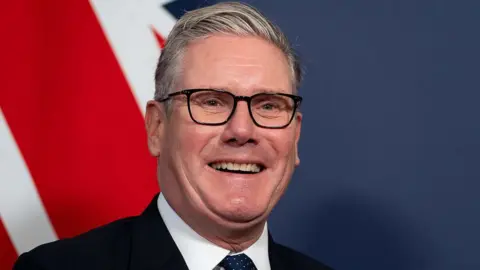
"We are better focusing on the European single market instead of the customs union for our further alignment," Sir Keir Starmer said.
He provided a definitive response that re-entering the tariff union was not the current focus, as it conflicts with what he considers one of the successes of the last twelve months: the conclusion of comprehensive trade pacts with the US and India, with more in the pipeline in the Gulf region.
Focusing On the Internal Market
Rather than the customs union, his focus is on developing a "more integrated partnership" with the single market, which would not mean ripping up those new trade deals with other nations.
When the UK officially exited the EU in the start of 2021, the agreement at the time stressed freedom from EU standards over seamless commerce for UK businesses in EU nations.
The current reset outlines harmonising with EU rules in three key areas to help the easier passage of trade: food and farm exports, power, and emissions trading.
Industry Demands
A leading commercial body last month released a list of further requests in various industries to assist exporters navigate administrative barriers that has hit the goods trade.
Its internal research indicated that a significant number of companies surveyed believed that the current arrangement was impeding sales growth.
A host of further domains could, feasibly, see a similar approach – convergence with single market rules – in return for lowering trade obstacles across industry, in the car industry, chemicals, or for example in VAT procedures.
European Perception
European capitals were unimpressed by the limited scope in the previous recalibration, specifically the British rejection of proposals put forward by some experts regarding the effective return of British exports to the single market.
The exact terms on electricity and agricultural regulations is yet to be finalised. A initiative for UK companies to be participate in a major defence loan fund has been delayed over the scale of the membership fee, after opposition from France. Canada has signed up to the scheme.
Geopolitical Context
The UK has reached an agreement to return to a student mobility programme and to further negotiate a youth mobility program. This has facilitated progress for further UK-EU talks.
Analysts close to government say that the release last month of a American national security strategy has shifted the backdrop on UK relations with Europe.
The document noted that the US would "foster opposition" to Europe's current trajectory and praised the "growing influence" of nationalist groups.
Within the administration, there is some recognition that the international situation has shifted once more.
Political Calculations
At home, the administration also anticipates being pressured on European policy by one political rival, but potentially others, which is targeting its key electoral areas in May's elections.
The Leader's weekend remarks are the product of a intersection of business needs, electoral strategy and global dynamics as the UK starts a year that will see the decade milestone of the landmark EU vote.
